
Ruth First Lectures
Ruth First Lectures
Marc Wuyts
20 November 2025
“Ruth First and the Mozambican Miner: Developing a novel perspective on the practice of research and teaching”
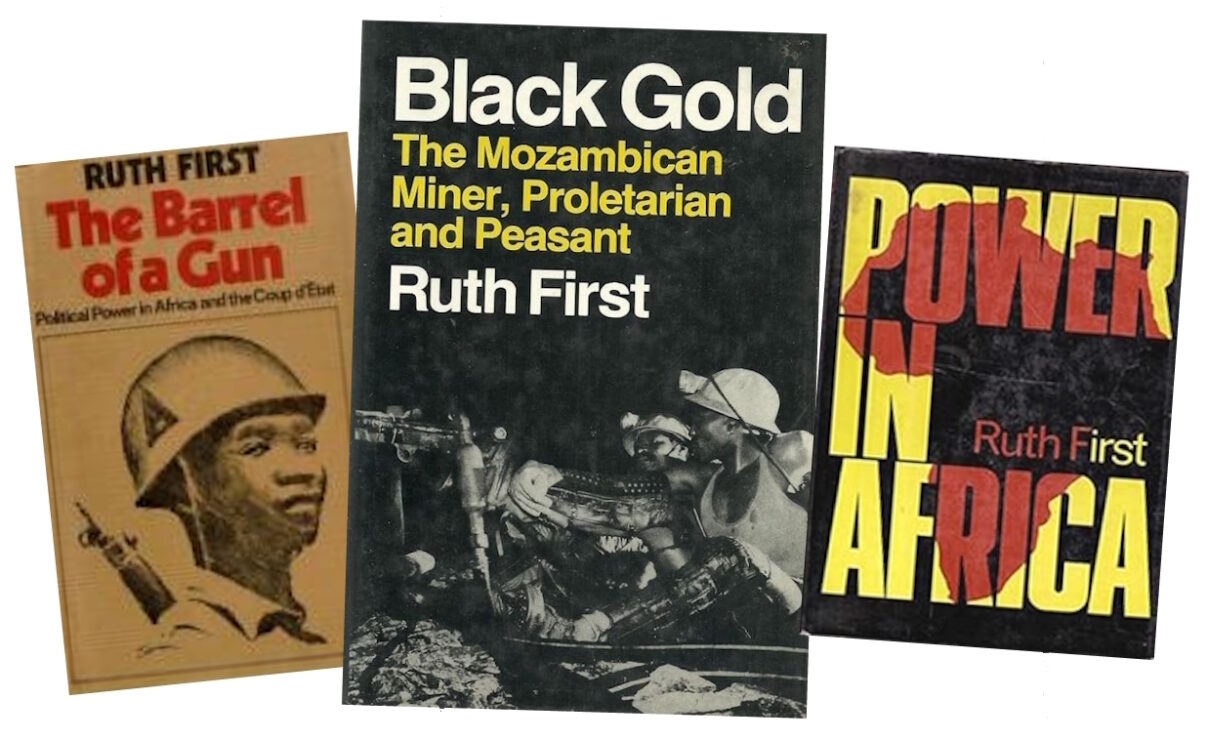
Summary: Marc worked with Ruth First at the Centro de Estudos Africanos (CEA) at Eduardo Mondlane University in the late 1970s. He recounted how her research project on the Mozambican miner opened a new space for investigative social research at the CEA. The project developed a set of practices based on collective research methods and a critical perspective for engaging with ongoing processes of social transformation. The CEA’s development course was subsequently set up to combine research and teaching and enable Mozambican researchers, academics or not, to actively engage in field research and concrete analysis, and to reflect critically on what they found, even if that meant raising awkward questions. The event also included reflections from other members of Ruth First’s research team at the CEA – Dave Wield, Bridget O’Laughlin, Maureen Mackintosh and Helena Dolny.
Biography: Marc Wuyts is Professor Emeritus of Quantitative Applied Economics at the International Institute of Social Studies (ISS) of Erasmus University Rotterdam in The Hague. He taught at the University of Dar es Salaam in Tanzania from 1972 to 1976, and in July 1976 he joined the Economics Faculty of Eduardo Mondlane University in Mozambique. While there, he worked at the Centre of African Studies with Aquino de Bragança and Ruth First. From 1984 to 2011, he taught at the ISS in the Netherlands. He has held visiting professorship positions at SOAS (London), Edinburgh and the Open University (UK). His research focuses primarily on the macroeconomics of the agrarian question and industrial transformation, money and planning, employment and poverty reduction.
Watch a recording of the event onYouTube
Ahmed Bawa
28 April 2014
“We were wrong: the struggle was not a prophet of our future”
Summary: Some very substantial advances have been made in the 20 years since the first democratic elections in South Africa, driven partly by the rich texture of the reconciliation imperatives of the Mandela presidency and partly on the wings of the euphoria of the unfolding of the nascent democracy. And while there has been modest economic growth and the delivery of services to larger and larger sections of the population, the widening of the wealth gap between rich and poor gallops along at a furious pace. This has resulted in increasing tensions between communities and the state as demonstrated in the ongoing service delivery actions which have often turned violent. Deep disquiet over crime and corruption is prevalent all over. Where are we heading? And can we recreate the dynamism, truth and selflessness that so characterised our struggle for freedom and democracy as a basis on which to build a democratic, egalitarian South Africa?
Biography: Professor Ahmed Bawa took a PhD in Theoretical Physics at Durham in 1986-89. He played a leading role in the reform and renewal of higher education in South Africa in the post-apartheid era. He has taught at the University of Durban-Westville and City University of New York, has been Deputy Vice Chancellor at the Universities of Natal and KwaZulu-Natal, and from 2002 to 2004 worked for the Ford Foundation, running a strategic grants programme designed to facilitate the development of universities and university systems in Africa. He was Vice-Chancellor and Principal of Durban University of Technology between 2010 and 2016.
Gillian Slovo
26 October 2012
In conversation with Dr Diana Collecott, Professor Justin Willis and Baroness Maeve Sherlock
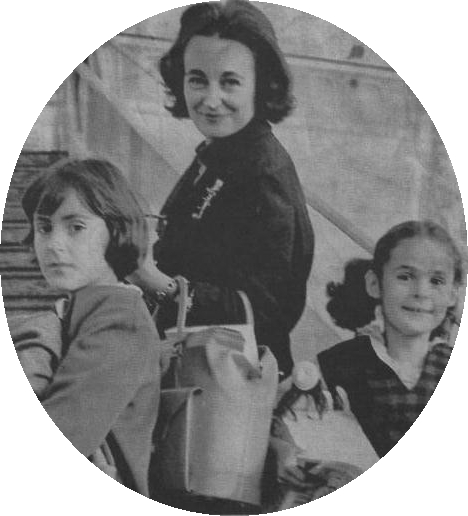
Summary: Following her appearance at the Durham Literature Festival, Gillian spoke about her parents and South Africa, but also about her own work – writing about Africa, history, memory, politics and her family.
Biography: Gillian Slovo is a writer. Her novels include Red Dust (2000), Black Orchids (2008), An Honourable Man (2012) and Ten Days (2016). She is also the author of two verbatim play texts tackling controversial topics which have been widely performed: Guantanamo: ‘Honor Bound to Defend Freedom’ (2005) and The Riots (2011). She was President of English PEN from 2011 to 2013. She is the daughter of Joe Slovo and Ruth First, and has lived in London since her parents were exiled from South Africa in 1964. Her book Every Secret Thing (1997) is a moving account of growing up in the shadow of her parents’ involvement in the anti-apartheid struggle.
Clare Short
25 October 2006
“Prospects for Post-Apartheid Africa”
Biography: Clare Short MP was Secretary of State for International Development from 1997 to 2003. She stood down from Parliament in 2010 after 27 years as MP for Birmingham Ladywood.
Lindiwe Mabuza
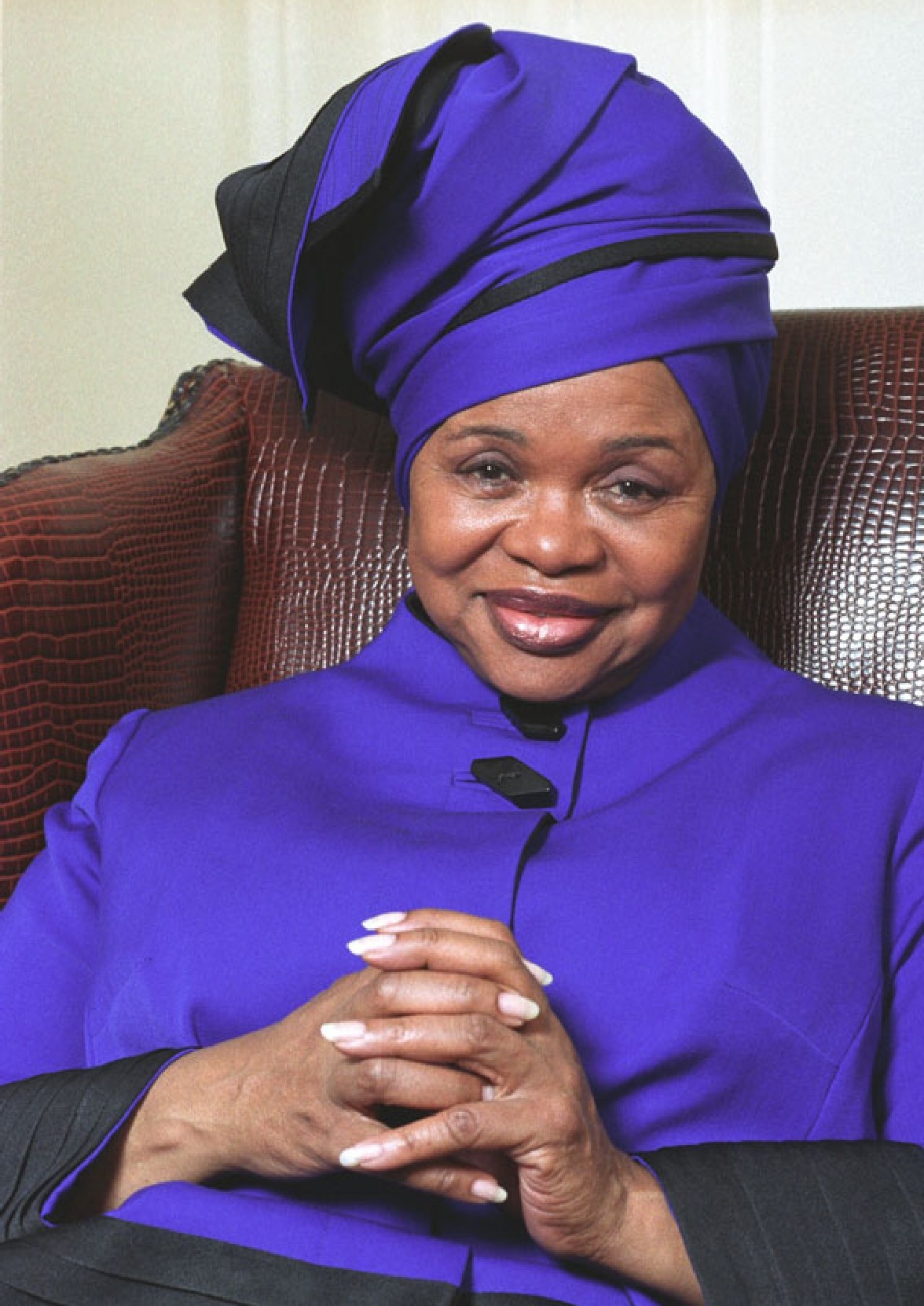
November 2004
HE Lindiwe Mabuza was South Africa’s High Commissioner to the UK and the Republic of Ireland between 2001 and 2009. Like Ruth First, she was a journalist, writer, university lecturer and anti-apartheid campaigner. She was ANC’s Chief Representative in Scandinavia and the USA, and became a member of South Africa’s first democratic parliament in 1994 before being appointed Ambassador to Germany in 1995.
She gave a moving and inspiring talk about the struggle against apartheid and the prospects for South Africa ten years after the establishment of democracy.
George Alagiah
16 October 2001
“A Passage to Africa: A journey through post-colonial Africa”
Brought up in Sri Lanka, Ghana and England, George Alagiah studied Politics at Durham University and was editor of the student newspaper Palatinate. He has worked for the BBC since 1989 as a foreign correspondent, reporting extensively on Africa, and as a TV news presenter.
He drew on his recently published book A Passage to Africa, using the baobab tree as a powerful image summing up his view of Africa:
“If only the baobabs could speak. They have seen it all: the best and the worst. They have known incredible beauty and terrifying ugliness. So today, in their gnarled and knobbly old age, perhaps they are not confused or worried about what is happening in this most blighted of continents. They have experienced the ebbs and flows of history. They understand that no condition is permanent. They know that Africa is not as fragile as she sometimes looks. Africa will change. Its people will be strong. Nkosi sikele Afrika. God bless Africa. Ye mre bé bà bio. Our time will come again.”
| Updated Oct 2022 | Back to home page |